

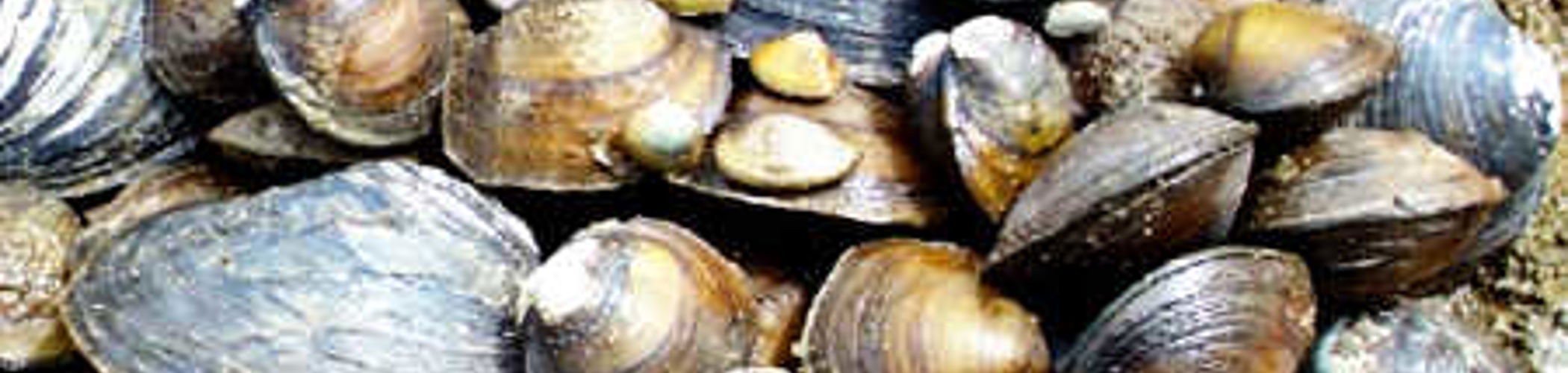
Freshwater mussels (Family: Unionidae) play important roles in freshwater ecosystems by facilitating nutrient cycling, increasing habitat heterogeneity, and serving as a food source for fishes, mammals, and birds. Due to their sensitivity to various environmental stressors, inability to escape human-mediated perturbations due to their limited mobility, and dependence on fishes to complete their life cycle, they are one of the most imperiled taxonomic groups in North America. In Texas, 15 of the 52 described species (29%) are listed as state threatened and two of these species, Pleurobema riddellii (Louisiana Pigtoe) and Potamilus amphichaenus (Texas Heelsplitter), are being considered for protection under the Endangered Species Act (ESA). However, the distribution of these species is still poorly known for some rivers within their presumptive ranges. This lack of information may hinder USFWS efforts to analyze the current and future viability of these two species through the Species Status Assessment (SSA) framework. The goal of this study is to provide high quality distribution information for P. riddellii and P. amphichaenus in select river systems within East Texas and Louisiana where they have been recently discovered or where their occupancy is suspected. Emphasis is being placed on surveying locations where additional information can help inform the SSA process for these species. The results gathered from this effort will help inform the listing process for these species and contribute to the knowledge base for mussel research in the southeastern United States. Comprehensive field surveys will be implemented in select rivers and streams in east Texas and western Louisiana to address knowledge gaps in the distribution and abundance of P. riddellii and P. amphichaenus. Putative identifications will be confirmed using a DNA barcoding approach. Historical data plus survey results from the present study we will used to develop conservation status assessment maps for P. riddellii and P. amphichaenus, which can be used to guide monitoring and recovery actions.